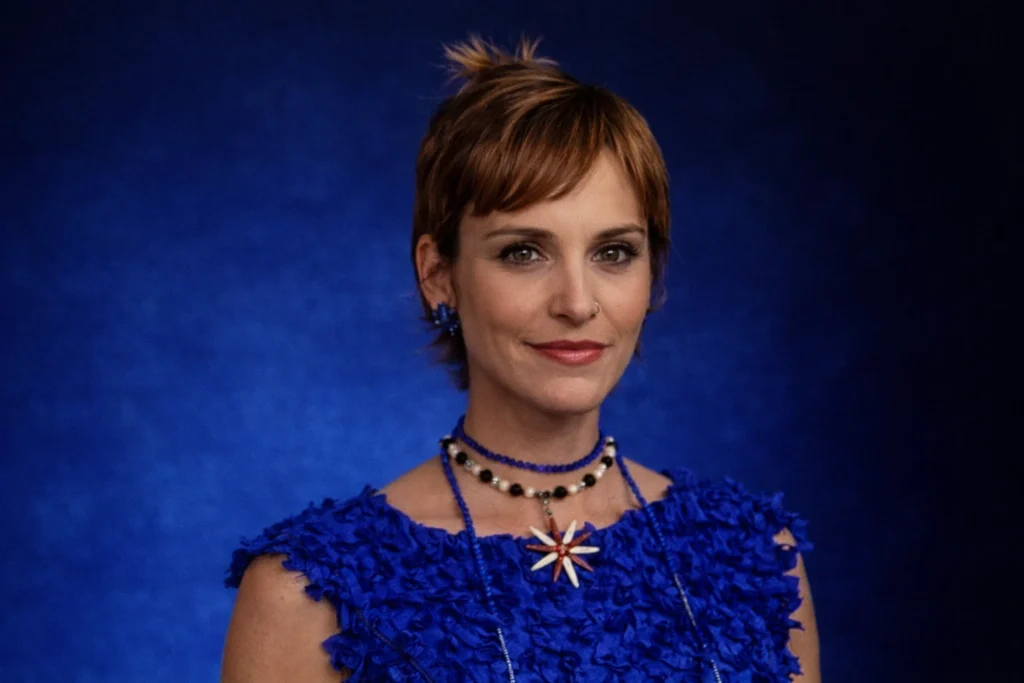

For many people, the name Heidi Van Pelt surfaces from a specific cultural moment in the early 2000s, tied closely to a headline-grabbing marriage that stirred debate far beyond celebrity gossip pages. But reducing her story to that single chapter misses the broader, more complicated path she followed before and after the spotlight found her. Her life sits at the intersection of alternative food culture, brief brushes with entertainment, and a public narrative shaped as much by media curiosity as by documented fact.
What makes Heidi Van Pelt an enduring search topic isn’t just who she married, but how little of her later life has been clearly recorded. That gap has allowed speculation to grow, often outpacing verifiable detail. So the challenge in telling her story isn’t a lack of interest, but separating what’s known from what’s simply been repeated.
Early Life and Background
Heidi Van Pelt was born in the late 1960s in the United States, though exact details about her early years remain thin in the public record. Unlike many figures tied to celebrity stories, she did not enter public life through film, television, or music. Instead, her early interests appear to have leaned toward nutrition, alternative lifestyles, and eventually vegan food production.
There are scattered references to her pursuing education in fields related to health or nutrition, though these claims often come from secondary sources that lack strong documentation. What can be said with more confidence is that by the late 1990s, she had begun moving within circles interested in plant-based diets and small-scale food entrepreneurship. This would later become one of the few consistent threads in her public life.
Not many people know this, but Van Pelt’s early trajectory was not aimed at celebrity at all. She was not building a media persona or working toward mainstream recognition. Her later visibility would arrive through a very different route.
A Marriage That Drew National Attention
Heidi Van Pelt’s name entered widespread public awareness in 2001 when she married Taran Noah Smith, the former child actor best known for playing Mark Taylor on the long-running sitcom Home Improvement. The marriage quickly became a topic of national conversation, largely because of the significant age difference between the two.
Smith had just turned 18 at the time of the wedding, while Van Pelt was 33. That 16-year gap drew intense media scrutiny, especially given Smith’s status as a former child star transitioning into adulthood. Coverage often focused less on the individuals involved and more on the broader questions the relationship raised about age, power, and independence.
The truth is, the story became bigger than either of them. For Smith, it was tied to his public image as a young actor stepping away from Hollywood. For Van Pelt, it meant being cast into a narrative she hadn’t built herself. Headlines frequently framed her in ways that reduced her identity to that relationship, a framing that would follow her for years.
There were also reports at the time about tensions between Smith and his parents, including legal disputes over his trust fund. Some accounts suggested the marriage played a role in his efforts to gain independence, though these claims should be treated with caution unless tied to primary reporting. What is clear is that the situation added another layer of public attention to an already controversial union.
Life After the Spotlight Moment
The marriage lasted several years before Van Pelt and Smith separated. Divorce proceedings were filed in early 2007, marking the end of a relationship that had been under scrutiny almost from the beginning. By that point, public interest had already begun to fade, and media coverage became less frequent.
Here’s where it gets interesting. While the marriage was the most visible part of Van Pelt’s life, it was not the only part. After the split, she continued to pursue work connected to vegan food and alternative nutrition, areas she had been involved in before her time in the headlines.
Unlike many figures who step away from public attention, Van Pelt didn’t reemerge with a reinvention campaign or a media narrative shift. Instead, her activities became more localized and less documented, which has contributed to the mystery surrounding her later years.
Playfood and the Vegan Food Movement
One of the more concrete chapters in Heidi Van Pelt’s story is her involvement in a company known as Playfood. The business focused on vegan products, including dairy-free cheese alternatives, at a time when plant-based eating had not yet reached the mainstream popularity it enjoys today.
Playfood operated during the mid-2000s, a period when vegan food businesses were still niche and often experimental. The company reportedly produced soy-free vegan cheese, which was a notable distinction in a market where soy-based substitutes were more common. This positioned Playfood within a small but growing segment of the food industry.
What’s surprising is how little attention this part of her work has received compared to her personal life. In many online profiles, Playfood is mentioned briefly, if at all, even though it represents a tangible effort to build something outside the entertainment world. That imbalance reflects how celebrity associations can overshadow other aspects of a person’s career.
While detailed financial records or long-term outcomes for Playfood are not widely available, its existence places Van Pelt within an early wave of entrepreneurs exploring plant-based alternatives. In hindsight, that movement would expand dramatically in the years that followed.
A Brief Connection to Film and Television
Heidi Van Pelt is sometimes described online as an actress or filmmaker, though the evidence for a substantial career in entertainment is limited. Her most commonly cited credit is a 2002 project titled String Theory, along with appearances as herself in documentary-style programming.
That said, these credits do not point to a sustained career in film or television. They appear more as isolated entries rather than part of a larger professional trajectory. It’s a reminder of how easily small connections to the entertainment industry can be amplified in online biographies.
But here’s the thing. Being linked to Hollywood, even briefly, often changes how a person is categorized in public databases and search results. In Van Pelt’s case, that has led to descriptions that don’t fully match the scope of her documented work.
Kansas City and the Füd Chapter
In the years after her divorce, Heidi Van Pelt’s story intersects with Kansas City, where she became associated with a vegan restaurant known as Füd. The restaurant gained a local following and was part of a growing interest in plant-based dining in the region.
Füd operated as more than just a restaurant. It was a community space for people interested in vegan food, sustainability, and alternative lifestyles. Van Pelt’s involvement connected her once again to the food world, reinforcing a pattern that had been present earlier in her life.
The restaurant eventually closed, and its shutdown drew attention from local media, which reported on unusual circumstances surrounding its final days. These reports added another layer of intrigue to Van Pelt’s public record, though they were largely confined to regional coverage rather than national headlines.
What stands out about this period is how different it feels from the earlier chapter of her life. Instead of national attention, the focus shifted to local impact and community presence. It’s a quieter kind of visibility, but one that suggests a more grounded direction.
Public Image and Online Narratives
Heidi Van Pelt’s online presence is shaped less by her own public statements and more by how others have written about her. Many biography sites repeat the same handful of details, often without clear sourcing. This creates an illusion of depth while actually narrowing the narrative.
The numbers tell a different story. There are dozens of pages about her, but only a small portion offer verifiable information. This pattern isn’t unique to Van Pelt, but it is especially noticeable in her case because of how limited the primary record is.
That said, the persistence of interest in her life speaks to how certain stories linger in public memory. The combination of a celebrity connection, a controversial relationship, and a later retreat from the spotlight creates a kind of unfinished narrative that people continue to revisit.
Where Is Heidi Van Pelt Now?
One of the most common questions about Heidi Van Pelt is where she is today. The honest answer is that there is no widely verified, up-to-date public record of her current activities as of 2026. Unlike many public figures, she does not appear to maintain a strong media presence or actively engage with public platforms.
Some websites claim details about her personal life, including relationships, family, or financial status, but these claims often lack reliable sourcing. Without confirmation from credible outlets or direct statements, they should be approached carefully.
The absence of recent information isn’t unusual for someone who has stepped away from public life. In fact, it may reflect a deliberate choice to remain private after years of being defined by a single, highly publicized chapter.
Frequently Asked Questions
FAQ
Who is Heidi Van Pelt?
Heidi Van Pelt is an American figure best known for her marriage to former child actor Taran Noah Smith in 2001. Beyond that relationship, she has been associated with vegan food ventures such as Playfood and later with a restaurant in Kansas City. Her public profile is relatively limited outside of those connections. Much of what is known about her comes from a small number of documented sources.
Why did Heidi Van Pelt become famous?
She became widely known due to her marriage to Taran Noah Smith, which attracted significant media attention because of their age difference. The relationship was covered extensively in the early 2000s and became a topic of public debate. That exposure placed her name in national headlines. Her later activities did not receive the same level of attention.
What was Playfood?
Playfood was a vegan food business associated with Heidi Van Pelt and Taran Noah Smith during their marriage. The company focused on producing plant-based products, including soy-free vegan cheese. It operated during a time when vegan food was still a niche market. While not widely known today, it reflects an early involvement in the plant-based food movement.
Did Heidi Van Pelt have a career in acting?
Her connection to acting appears limited to a small number of credits, including a project titled String Theory and appearances as herself in television programming. These do not indicate a long-term career in film or television. Most descriptions of her as an actress are based on these isolated credits. Her primary documented work is more closely tied to food and business ventures.
Where is Heidi Van Pelt now?
There is no widely confirmed public information about Heidi Van Pelt’s current life as of 2026. She does not appear to maintain a strong public or media presence. Many claims about her recent activities are not supported by reliable sources. It is likely that she has chosen to live a more private life away from public attention.
READ ALSO:Bitclassic Applewhite: What It Is and Why It Matters
Conclusion
Heidi Van Pelt’s story is one of contrast. On one hand, she is remembered for a relationship that drew intense public scrutiny and became part of early 2000s celebrity culture. On the other, her documented work points to quieter efforts in fields that rarely make headlines, such as vegan food production and local business.
The gap between those two narratives is where much of the confusion about her life comes from. The public remembers the moment of visibility, while the years that followed are less clearly recorded. That imbalance has allowed speculation to fill in the blanks, often without strong evidence.
But here’s the thing. Not every life that brushes against fame continues on that path. In Van Pelt’s case, the available record suggests a shift away from national attention and toward more private pursuits. Whether by choice or circumstance, she became someone known for a moment rather than a long-running public presence.
Looking ahead, her story is unlikely to gain new chapters unless she chooses to reenter public life. For now, she remains a figure defined by a handful of well-documented events and a much larger space of unknowns. And perhaps that’s what keeps people searching for her name long after the headlines have faded.