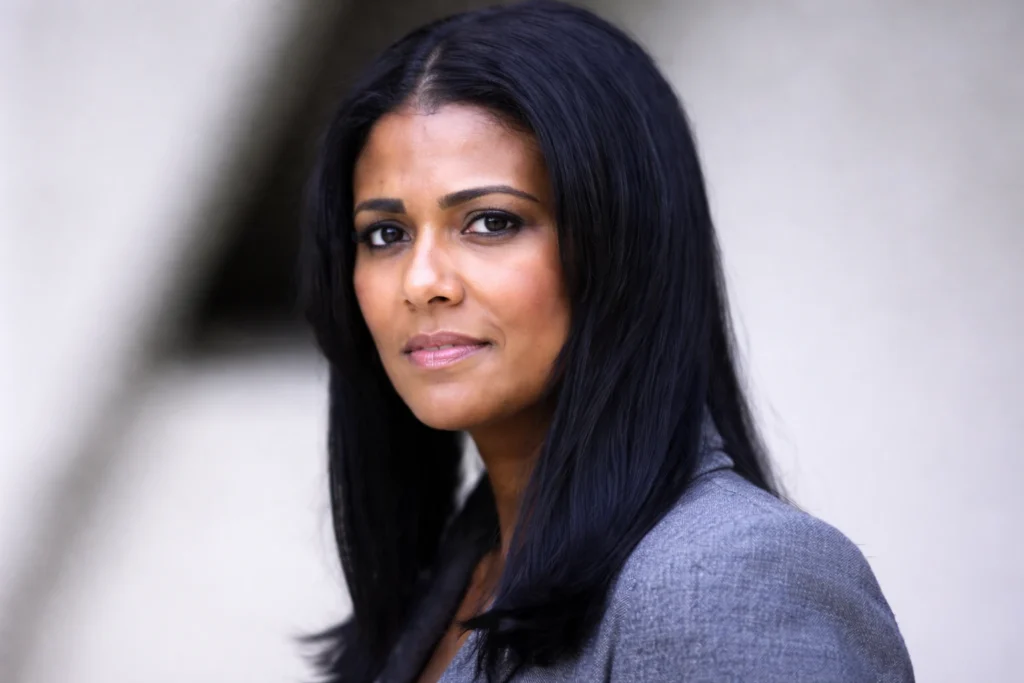

Search the name “Tyna Karageorge,” and you’ll find a curious mix of court documents, news reports, and loosely sourced biography pages. It’s the kind of digital footprint that suggests fame, but not the usual kind built on entertainment or business success. Instead, her name has remained in circulation because of a series of legal disputes, personal relationships tied to public figures, and events that drew intense media attention at specific moments in time.
But here’s the thing. Tyna Karageorge has never been a conventional public figure. She has appeared in headlines not by design, but through circumstances that placed her at the center of legal and personal conflicts. To understand who she is, you have to move past the recycled summaries and look carefully at what the public record actually shows.
Early Life and Background
Reliable details about Tyna Karageorge’s early life are limited, and that absence says something in itself. Unlike celebrities or career public figures, she did not enter the public eye through a profession that required visibility. Much of what circulates online about her childhood, education, or upbringing is either thinly sourced or repeated without verification.
What can be confirmed is that she was previously known as Tyna Robertson, a name that appears in earlier legal proceedings and media coverage. That earlier identity becomes important when tracing her story across different periods, since many of the key events associated with her public profile took place before she used the name Karageorge.
The lack of detailed biographical information from her early years stands in contrast to the intensity of attention that would come later. It also shapes how her story must be told: not as a traditional rise, but as a timeline built from documented moments.
The Name Change and Identity in Public Records
At some point after her earlier legal disputes, Tyna Robertson became known as Tyna Karageorge. Court documents confirm this transition, identifying her as “formerly known as Tyna Robertson.” That shift is more than a technical detail. It’s one of the reasons her story appears fragmented across search results, with different names attached to different chapters.
Name changes in public records often reflect life transitions such as marriage, and in this case, it aligns with her relationship with Ryan Karageorge. Still, the dual identity has contributed to confusion, especially online, where some sources treat the two names as separate individuals.
Here’s where it gets interesting. The dual naming has also allowed a kind of parallel narrative to develop, where earlier events tied to Robertson and later events tied to Karageorge are sometimes discussed without being clearly connected. Any accurate account has to bridge that gap.
Early Legal Attention: The Michael Flatley Case
Tyna Robertson first entered broader public awareness in the early 2000s through a legal dispute involving Michael Flatley, the internationally known dancer behind Riverdance and Lord of the Dance. In 2003, Robertson filed a civil sexual assault lawsuit against Flatley, bringing her name into national media coverage.
The case did not unfold quietly. Flatley denied the allegations and filed a countersuit, leading to a prolonged legal conflict that included claims of extortion and defamation. The dispute became widely reported, not only because of Flatley’s profile but also because of the serious nature of the accusations on both sides.
That said, the legal battle ultimately ended without a straightforward narrative of vindication for either side in the public sphere. What remained was a complicated record that continued to follow Robertson in later years. It marked the first time her name became part of a broader public conversation, setting a precedent for how her story would be framed.
Relationship With Brian Urlacher and Parenthood
By the mid-2000s, Tyna Robertson was again in the public eye, this time through her relationship with Brian Urlacher, the Chicago Bears linebacker who would go on to be inducted into the Pro Football Hall of Fame. The two shared a son, Kennedy Urlacher, born in 2005.
Their relationship did not remain private for long. In 2007, reports surfaced about a legal dispute involving visitation and parenting arrangements. A Cook County judge ordered Robertson to attend parenting classes as part of the case, which drew coverage from sports and local media outlets.
For many readers encountering her name today, this connection to Urlacher is the entry point. It ties her story to a recognizable public figure and adds a layer of visibility that extends beyond the earlier Flatley case. But the truth is, her role in this chapter is primarily defined through family court proceedings, not public-facing work or achievement.
Marriage to Ryan Karageorge
At a later stage, Robertson married Ryan Karageorge, and it is through this relationship that her current surname entered the public record. Compared to earlier chapters of her life, this period was far less visible—until a tragic event in late 2016 brought her back into the spotlight.
Ryan Karageorge died in December 2016 at the age of 42. His death, reported as the result of a gunshot wound, quickly became the subject of investigation and media coverage. While details about the circumstances were reported at the time, the broader public record remains limited and, in some respects, unresolved in terms of public clarity.
What is clear is that the aftermath of his death had immediate consequences for Tyna Karageorge’s life, particularly in relation to custody and legal disputes involving her son.
The Aftermath of 2016 and Custody Developments
Following Ryan Karageorge’s death, attention turned again to the custody of Kennedy Urlacher. Reports indicated that Brian Urlacher sought and was granted temporary custody of their son in the immediate aftermath of the incident.
This development added a new layer to an already complex history between the parents. The situation was shaped not only by past disagreements but also by the sudden and serious nature of the events in 2016.
Not everyone agrees on how this period should be interpreted, and the public record reflects a mix of reporting, legal filings, and commentary. Still, the sequence of events—death, custody shift, and subsequent legal action—forms one of the most important turning points in Karageorge’s public story.
The 2018 Lawsuit and Defamation Claims
In 2018, Tyna Karageorge filed a lawsuit seeking $125 million in damages against Brian Urlacher and others. The case alleged defamation and conspiracy, arguing that false statements had been made about her in connection with the events following her husband’s death.
The lawsuit drew widespread media attention, in part because of the high dollar figure and the involvement of a well-known athlete. It also revisited earlier tensions, placing them in a new legal context.
But here’s the catch. The federal court handling the case ultimately dismissed claims against certain defendants with prejudice, meaning they could not be refiled, and dismissed others without prejudice due to procedural issues such as lack of service. In practical terms, the case did not proceed in the way the initial filing might have suggested.
This outcome is often glossed over in online summaries, which focus on the headline number rather than the legal resolution. A careful reading of court documents tells a more restrained story.
Public Perception and Media Echoes
By the late 2010s, Tyna Karageorge’s name had become associated with a specific set of events rather than an ongoing public role. Unlike celebrities who maintain visibility through new work or appearances, her presence in search results is largely driven by recirculation.
That said, the internet has a long memory. Biography-style websites continue to publish and republish content about her, often blending verified facts with speculation or generic details about age, education, and lifestyle.
The numbers tell a different story, though. The strongest, most reliable sources remain tied to discrete moments: the early 2000s lawsuit, the mid-2000s custody case, the 2016 death, and the 2018 legal filing. Outside of those points, the record becomes much thinner.
Personal Life and Privacy
One consistent theme in Tyna Karageorge’s story is the tension between public exposure and private life. Much of what is known about her comes from legal proceedings rather than voluntary public engagement.
There are no widely documented business ventures, entertainment careers, or public-facing projects that define her identity. Instead, her visibility has been shaped by events that required documentation and, in some cases, media coverage.
That creates a challenge for anyone trying to write about her. It’s easy to overreach, filling in gaps with assumptions. But the more honest approach is to acknowledge those gaps and respect the limits of the public record.
Net Worth and Financial Claims
Online searches often lead to claims about Tyna Karageorge’s net worth, but credible, verifiable figures are not readily available. Estimates vary widely, and many appear to be speculative or copied across multiple sites without clear sourcing.
Given the absence of confirmed financial disclosures or business activity tied to her name, any discussion of net worth should be approached with caution. Unlike public figures whose earnings are tied to careers in entertainment or sports, there is no clear framework for calculating her financial standing.
So what does this actually mean? It means that readers should treat such figures as unverified unless supported by reliable documentation, which at present is limited.
Recent Years and Current Status
As of recent years, there has been little verified public reporting about Tyna Karageorge’s day-to-day life. She has not maintained a visible presence in media, and no major new legal cases tied to her name have drawn comparable attention to those of the past.
This relative quiet has not reduced search interest, however. Instead, it has allowed older stories to circulate repeatedly, often without updates or additional context.
What’s surprising is how persistent that interest remains. It reflects not ongoing public activity, but the lingering impact of a handful of high-profile events.
Frequently Asked Questions
Frequently Asked Questions
Who is Tyna Karageorge?
Tyna Karageorge is known through public records and media coverage related to legal disputes and her connection to former NFL player Brian Urlacher. She was previously known as Tyna Robertson. Her name appears in reporting tied to custody matters, a 2016 death involving her husband, and a later lawsuit.
Is Tyna Karageorge the same person as Tyna Robertson?
Yes, court documents confirm that Tyna Karageorge was formerly known as Tyna Robertson. The name change likely reflects a later stage in her personal life. Many earlier events associated with her are documented under the Robertson name.
What is her connection to Brian Urlacher?
Tyna Karageorge and Brian Urlacher share a son, Kennedy Urlacher, born in 2005. Their relationship included legal disputes over visitation and custody. These proceedings brought her name into sports and local media coverage.
What happened to Ryan Karageorge?
Ryan Karageorge died in December 2016 at the age of 42. His death was reported as the result of a gunshot wound. The event led to renewed legal and custody developments involving Tyna Karageorge and her son.
What was the $125 million lawsuit about?
In 2018, Tyna Karageorge filed a lawsuit alleging defamation and conspiracy against Brian Urlacher and others. The case sought $125 million in damages. Federal court proceedings later dismissed key parts of the case, limiting its progression.
Read Also: Bitclassic Applewhite: What It Is and Why It Matters
Conclusion
Tyna Karageorge’s story does not follow a familiar arc. There is no steady rise, no public career, and no curated presence that explains her visibility. Instead, her name persists because of a series of events that intersected with law, media, and public interest at specific moments.
That said, the record is clearer than it might seem at first glance. It points to a handful of documented episodes—each significant in its own way, but not part of an ongoing public narrative. The gaps between those episodes are just as telling as the events themselves.
There’s a tendency, especially online, to fill those gaps with assumption or repetition. But a more grounded approach shows something different: a life that has occasionally crossed into public view, without becoming defined by it in the usual sense.
Looking ahead, the question is not what new chapter will emerge, but whether the existing ones will continue to be retold with greater clarity. For now, Tyna Karageorge remains a name tied less to public identity and more to the enduring trace of documented events.